UDK:
Conference paper
www.znrfak.ni.ac.rs
ŽELJKO MILIĆ
1
ANICA RANĐELOVIĆ
2
MENTOR:
JELENA
MALENOVIĆ-NIKOLIĆ
1
University of Niš
Faculty of Occupational Safety
1
[email protected]
2
[email protected]
IMPACT OF EMERGENCIES ON HUMAN
PSYCHOLOGICAL STATE
Abstract:
Work environment refers to the totality of material factors
and social relations in which people perform their work and other
activities. Material factors include physical and technical work
environment conditions and social relations include relations between
people at work. The industrial revolution, especially the scientific and
technological revolution, induced substantial changes in the work
environment. As opposed to the “natural work environment” in the
post-industrial production, modern times gave rise to the creation of
“technical environment”, which is considerably different, particularly
during emergencies, which can have a negative impact on the
psychological state of workers.
Key words:
emergencies, work environment.
INTRODUCTION
A large number of machines in a specific enclosed
space, as well as the process of technical division of
labour, have enabled serial production. The position of
workers in the production process has changed, as well
as their relation to other workers. By working, people
establish connections and relations with other workers
and with their superiors. Relations of production cause
certain consequences for the workers as the social
relations in the work environment. This paper primarily
discusses the impact of work environment on people
during emergencies. The topic of psychological state of
humans in distress and fire and rescue crews during
fires, technical interventions, and other emergencies
requires a detailed analysis, as well as understanding of
what essentially causes the issues.
Hazards threatening personnel during
emergencies
The public learns about most of the hazards in difficult
work conditions from general sources of everyday
information, such as television, radio, the Internet,
newspapers, and others. It is also very well known that
these information sources are sometimes unable to
represent a given situation or the hazards therein as
they are, usually due to personal reasons or sheer
uninformedness.
Unfortunately, events such as fires, traffic accidents,
explosions, earthquakes, floods [1], and the like are
reported by the mass media on a daily basis. The
reports frequently comment on specific preventive
measures that would help avoid such events in the
future. It is well known that fires entail a hazard of
building collapse, fast combustion of easily ignitable
buildings, smoke poisoning, and high temperatures.
With regard to explosions and earthquakes, collapses
are fairly common, and there is risk of fires [2, 3] and
release of highly damaging gases into the atmosphere.
Floods are responsible for numerous destroyed
households and fertile soil, and they even cause
landslides.
The information obtained from the abovementioned
sources are not always completely true and are
sometimes based on incomplete data or information
used solely for the purpose of publicity. The issue that
receives little or no media attention is the psychological
state of people stricken by any of the aforementioned
emergencies and people who selflessly risk their own
lives trying to save the former group of people.
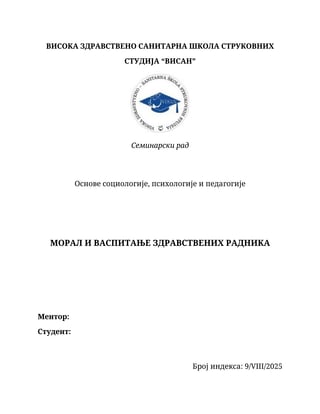
Figure 1.
Fixed fire suppression system [4]
Fires entail the hazard of collapse, high temperatures,
smoke inhalation, and the like. These are all true but
there are many more details pertaining to these events.
Collapses are very dangerous and, regardless of how a
building was constructed, there is always some risk of
collapse and the firefighters are aware of that risk.
In everyday circumstances, most buildings are not in
full compliance with regulations and standards, which
automatically considerably increases the risk of
collapse, even of “unplanned” collapse, as much as
such situations can be planned or calculated. The main
reason for this state is the lower standard of living and
the lack of sufficient material conditions for prescribed
construction measures and materials. The majority of
houses do not have regulation-compliant (strong
enough) foundations in relation to the size of the
building they support. Likewise, there are not enough
load-bearing columns and beams, which are the most
1 |
P a g e
50 Years of Higher Education, Science and Research in Occupational Safety Engineering, 6-7 December, 2018, Niš, Serbia
important parts of a building in terms of its durability;
buildings are usually built with partition walls, hollow
pot slabs, slabs, or solid bricks, which is sometimes
unsafe even in regular conditions, let alone during
emergencies. Some of the other problems include the
introduction of highly flammable and toxic materials in
construction work, increased number of electric devices
in everyday life, and the lack of general informedness
among people. When burning, some materials release
hazardous gases; for instance, many buildings contain
doors and windows made of PVC, which is essentially
plastic, releasing polyvinyl chloride gas [-(CH2-
CHCI-)n-], a highly toxic chemical compound, when
on fire. Even in small amounts, it can cause tumours,
skin conditions, endocrine gland disorders, lower
immunity, diabetes, and other serious health issues. It is
manifested later and cannot be registered instantly. The
same applies to other materials used in everyday life, as
most of them change their phase into gaseous when
exposed to high temperatures or fire and evaporate into
the atmosphere. This trend of building construction has
considerably reduced the time of evacuation from
burning buildings. The situation is the same with
earthquakes and floods in terms of construction
hazards.
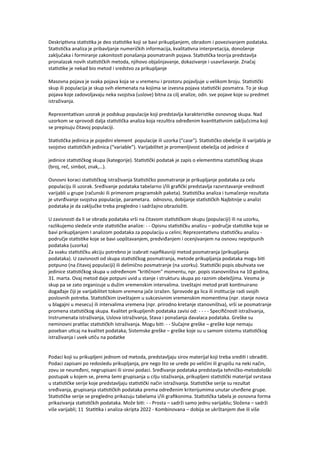
Figure 2.
Forest fire suppression [4]
Buildings constructed inadequately and against
regulation are always at risk of collapsing and they
constitute a high-risk work environment.
Psychological state of civilians (afflicted
persons) during emergencies
In modern times, people are not fully aware of how
hazardous their own actions are and how much their
lives are at risk. Of course, when considered
theoretically, these situations appear fairly simple. In
the event of any accident, there are procedures in place
that need to be followed. Even when people have the
opportunity to participate in an exercise (simulation),
e.g. fire in a residential building, the events unfold in a
much simpler manner than they would in an actual fire
event. First of all, people are subconsciously aware that
they are witnessing a simulation and that there is no
real risk, which means that there is time and room for
mistakes, as it is an exercise and there are professionals
monitoring and controlling the situation at all times.
Finally, after the simulation everyone returns to their
daily activities.
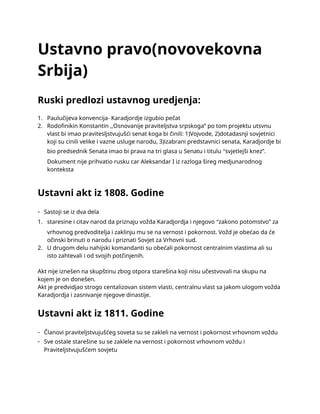
Figure 3.
Work activities of firefighters [4]
In real-life situations, things are completely different.
In most cases, homeowners are initially unaware of a
fire, a malfunctioning installation, a stove that is left
on, a cigarette butt, etc. Fires are most easily
suppressed in the earliest stages. After only several
minutes, a fire transitions into a blazing stage,
becoming a medium-size or a large fire, in technical
terms. Specifically, after one or two minutes, the
situation can drastically worsen, minimizing the
chances for fast response. In such situation, civilians
(afflicted persons) most often do not know how to
respond and experience panic attacks, anxiety,
sometimes even temporary paralysis, or chaotic and
absent-minded motion. When all of this is accumulated,
the afflicted persons are unable either to compose
themselves and call the fire and rescue units or to
ventilate the room, reduce the temperature, and lower
the risk of a flashover. Other necessary actions include
closing the doors, thus preventively creating fire
sectors, alarming the neighbours, collecting important
items (documents or valuables), turning off power
sources, and shutting off the gas valve if present. Fire
and rescue units arrive at the scene in 7 minutes on
average, they assess the scene, assess the risk, the first-
due engine company engages the fire inside, performs
rescue, desmoking, and extinguishment, while the
second-due and third-due companies simultaneously
engage the fire externally and form an evacuation
corridor, all of which requires around 10 minutes from
the fire alert. Depending on the fire, suppression takes
about 15-20 minutes from the arrival of firefighters,
sometimes even less, but the complete extinguishment
can last several hours. The entire process would be
much shorter and with significantly smaller material
damage if the residents themselves acted appropriately.
More vulnerable populations (senior citizens with
special needs, some adults, and children) pose certain
challenges to the fire and rescue units during the rescue
itself. Senior citizens with special needs require
additional care during rescue, which involves the
coordination of more members of engine companies
2 |
P a g e