Modal verbs: can/could/be able to/could have don
Prijava dokumenta
Napomena: Neke opcije za prijavu su dostupne samo nakon kupovine dokumenta.
Bosna i Hercegovina
BRČKO DISTRIKT
BOSNE I HERCEGOVINE
Internacionalni univerzitet
Brčko
Босна и Херцегoвина
БРЧКО ДИСТРИКТ
БОСНЕ И ХЕРЦЕГОВИНЕ
Интернационални
универзитет Брчко
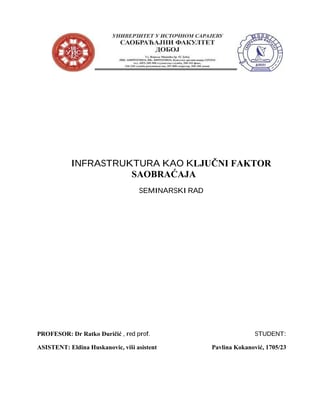
SEMINARY PAPER
THEME : Modal verbs: can/could/be able to/could have don
Profesor
Kristina Varcaković
Student
Introduction
There are only twelve modal auxiliary verbs but they are used with very great frequency and in a
wide range of meanings. They express concepts or attitudes relating to: recommendation, obligation,
necessity, and prohibition; permission and refusal, possibility, expectation, probability and certainty,
promise and attention, ability and willingness. There are four paired forms –
can/could, may/might,
shall/should, will/would
and four single forms –
must, ought to, need, dare
.
In this seminary paper we will will write about can/could/be able to/could have done.First we will explain
modal verb,and then we will give some example for that verb.

Ovaj materijal je namenjen za učenje i pripremu, ne za predaju.
Slični dokumenti